

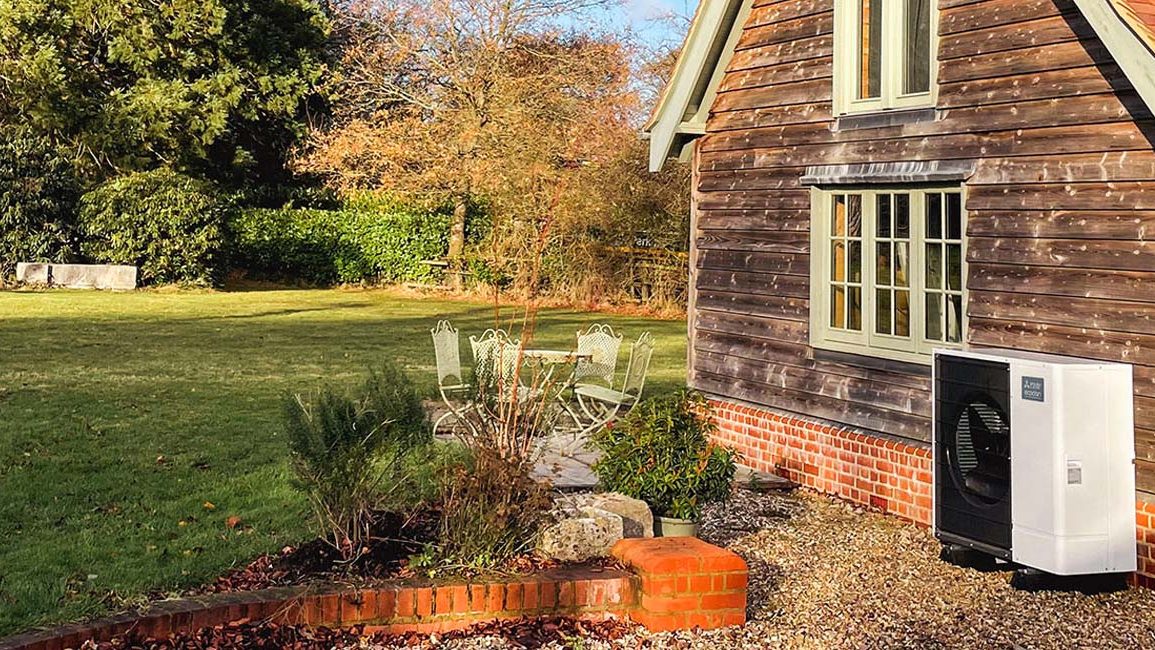
If you heat your Hampshire home with oil or LPG, the government has just increased your grant from £7,500 to £9,000. The announcement came on 21 April 2026, and for many rural households across the New Forest, Meon Valley and the villages around Winchester, it changes the numbers completely.
Homes on mains gas still qualify for the standard £7,500 Boiler Upgrade Scheme (BUS) grant. The uplift is targeted at properties off the gas grid, where heating oil prices have nearly doubled since the Middle East crisis began.
Who qualifies for the £9,000 grant?
You qualify if your Hampshire home currently runs on heating oil or LPG, you own the property, and you have an Energy Performance Certificate less than 10 years old. The grant is paid directly to your MCS-certified installer, so it comes off your invoice before you pay a penny.
MCS stands for Microgeneration Certification Scheme. It’s the accreditation required to install any BUS-eligible heat pump. AES has been MCS-certified for years.
What does it actually cost after the grant?
A typical air source heat pump (ASHP) installation in Hampshire costs between £10,000 and £14,000, depending on the size of your home and whether radiators need upgrading. For an off-grid property, the £9,000 grant brings your real cost down to roughly £1,000 to £5,000.
Research from Nesta, published this week, found that an off-grid home switching from oil to a heat pump can save over £650 a year on energy bills at current prices.
I’ve been fitting heating systems in Hampshire since 1988, and I’ve watched oil prices swing wildly every few years. Every time there’s a crisis somewhere, rural homeowners pay for it. A £9,000 grant is the first time the numbers have really stacked up for most off-grid properties I look at.
What else was announced?
Two other changes matter for Hampshire homeowners.
Planning rules are being relaxed. The government will consult this summer on easing permitted development rights for air source heat pumps, including siting restrictions that currently slow down installs in conservation areas and flats.
Electricity prices are being decoupled from gas. A new levy on generators and long-term fixed renewable contracts are designed to stop global gas spikes pushing up your electricity bill. That directly affects the running cost of any heat pump you install.
What should you do now?
If you’re on oil or LPG in Hampshire, the single best move is to get a free survey booked before installer diaries fill up. Grants of this size tend to accelerate demand quickly, and the BUS budget is finite.
AES will check your eligibility, measure your home, and give you a fixed quote with the £9,000 already deducted. If your property isn’t suitable, I’ll tell you that at the survey stage, before you commit to anything.
Book a free heat pump survey with Trevor — he’ll come out to your property, give you a straight answer on whether the new grant applies to you, and show you the real numbers for your home.
FAQs
Does the £9,000 grant apply to my gas-boiler home in Southampton?
No. Homes on mains gas still qualify for the standard £7,500 BUS grant. The £9,000 rate is specifically for oil and LPG properties, which are mostly rural.
How long will the £9,000 grant last?
The government hasn’t set an end date, but BUS funding is allocated annually and has been underspent in previous years. The uplift is live now and subject to future budget decisions.
Will a heat pump work in my old Hampshire farmhouse?
Usually, yes. Modern high-temperature heat pumps are designed for older, less-insulated properties. Trevor surveys every home individually. If yours isn’t suitable, he’ll tell you upfront.
Do I need to replace my radiators?
Sometimes, but not always. Around half the Hampshire installs AES does keep the existing radiators. This gets checked at the survey stage and is included in your fixed quote.
How long does a heat pump installation take?
Most AES installs take 3 to 5 days on site. There’s no need to vacate the property, and the heating typically switches over on the final day.